What Effective Delivery Looks Like in the Data
Rwanda’s performance in the World Bank’s Business Ready (B-READY) report, which assesses how effectively regulatory systems work in practice, offers a noteworthy data point in global discussions on regulatory reform and public-sector effectiveness.
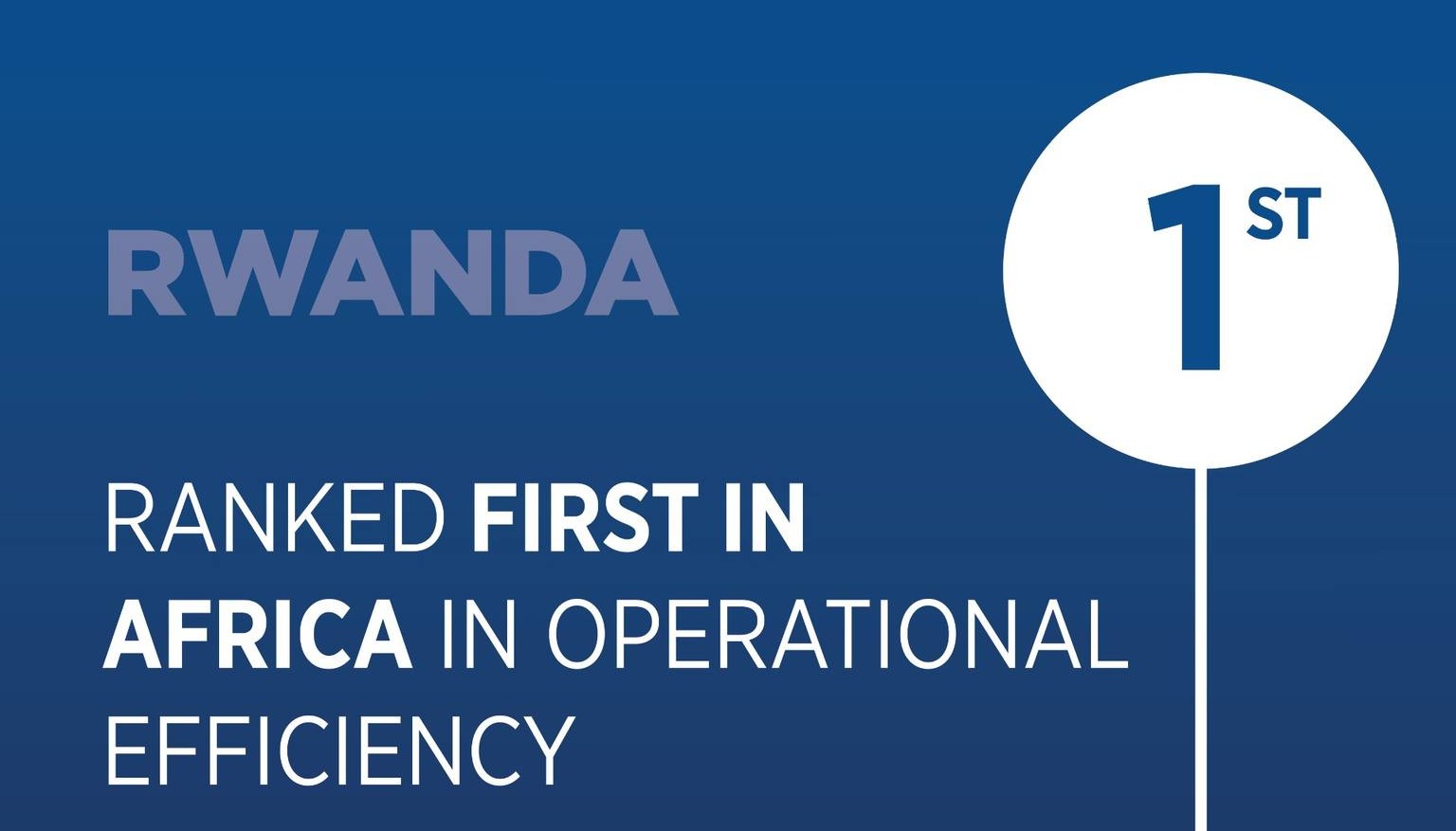
The report highlights Rwanda’s performance across key dimensions, ranking first in Africa in the regulatory framework, first in Africa in operational efficiency, 12th globally and the only Sub-Saharan African economy to reach this level, and third in Africa in public services, with continued progress underway.
The country is identified as one of the few economies worldwide and the only one in Sub-Saharan Africa to rank in the top quintile for Operational Efficiency. It appears alongside economies such as Singapore, Georgia, Bahrain, and Colombia, a comparison that stands out given Rwanda’s income level.
Why this matters:
Operational Efficiency reflects how policies function in practice how easily firms comply with regulations, access public services, and manage day-to-day operations, including permits, utilities, payments, and trade procedures. Rwanda’s placement suggests that administrative systems can deliver predictability and reliability, even in resource-constrained settings, when reforms are clearly targeted and consistently implemented.
The report also highlights Rwanda as an exception among lower-income economies. While 62% of strong performers are high-income, only 2% come from low-income economies and Rwanda is among this smaller group. This pattern underscores a broader point relevant to policymakers and development partners: institutional effectiveness and digital public services can help offset structural constraints.
Regional Context: Rwanda Breaks the Sub-Saharan Pattern
In a regional context, the findings are particularly instructive. Sub-Saharan Africa, on average, records the lowest scores across several pillars, especially Public Services and Operational Efficiency. Against this backdrop, Rwanda is singled out as a top-quintile performer in one of the three core pillars, offering a case study in selective but sustained reform. The data suggests progress that is focused rather than uniform, with lessons that may be applicable beyond national borders.
Overall, the report presents Rwanda not as a finished model, but as an example of how practical reforms, administrative clarity, and digital tools can translate policy intent into measurable outcomes.