Rwanda's Journey Under NST1: What Lies Ahead in NST2?
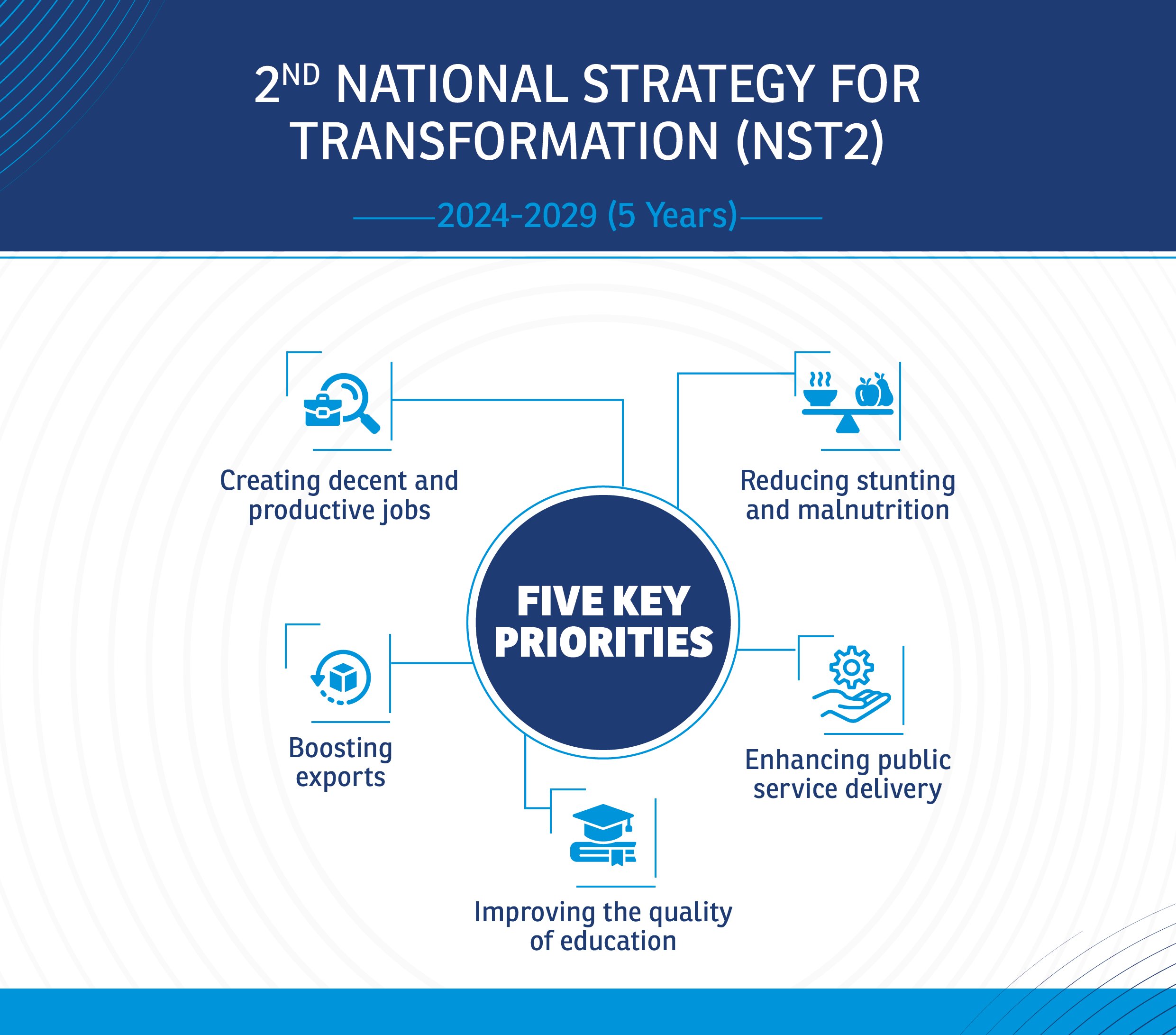
On August 23, 2024, the Government of Rwanda approved the Second National Strategy for Transformation (NST2), a five-year plan focused on:
- Creating decent and productive jobs
- Boosting exports
- Improving education quality
- Enhancing public service delivery
- Reducing stunting and malnutrition
Overview of 13 Goals in the 2nd National Strategic Transformation (NST2)
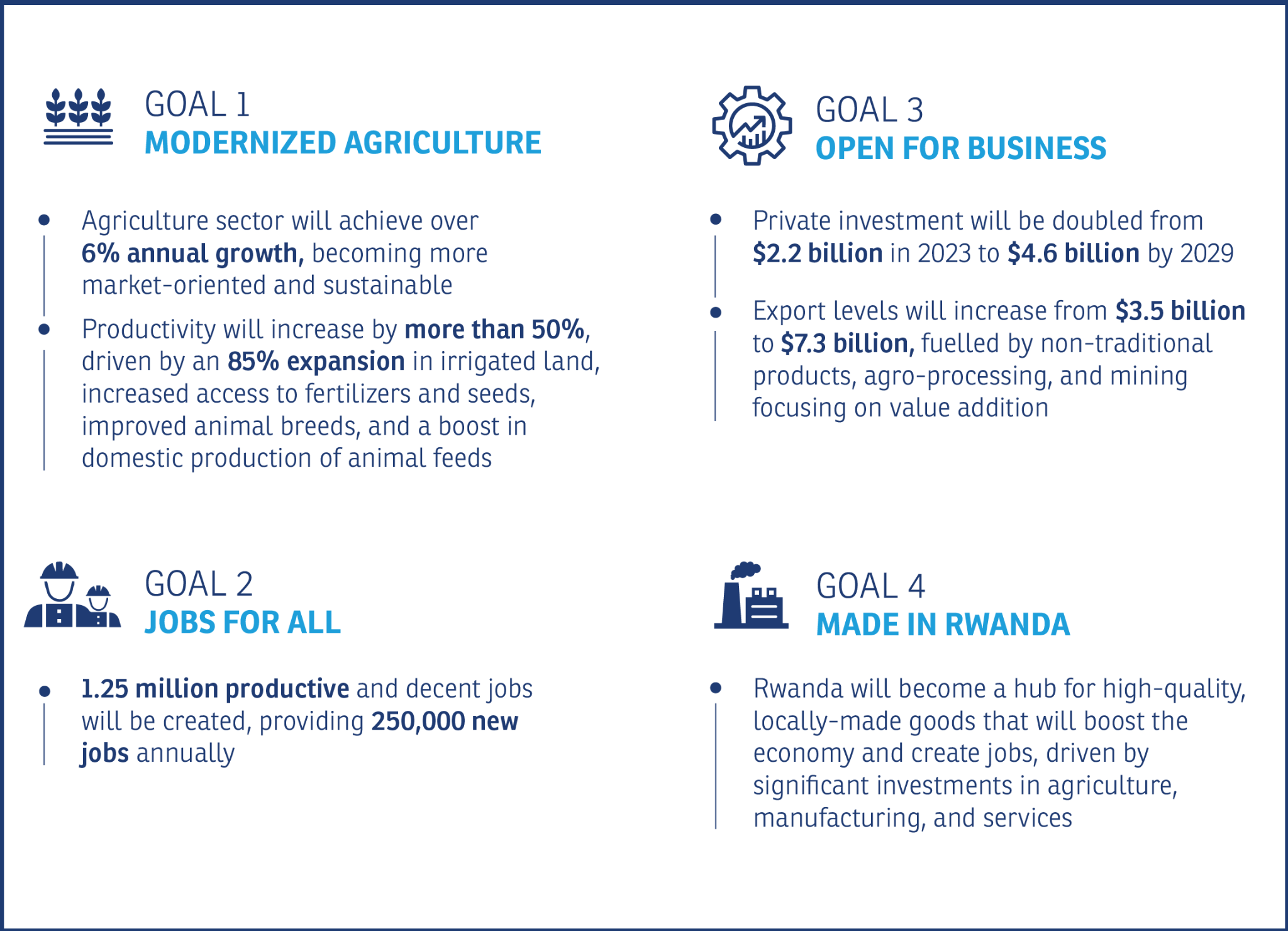
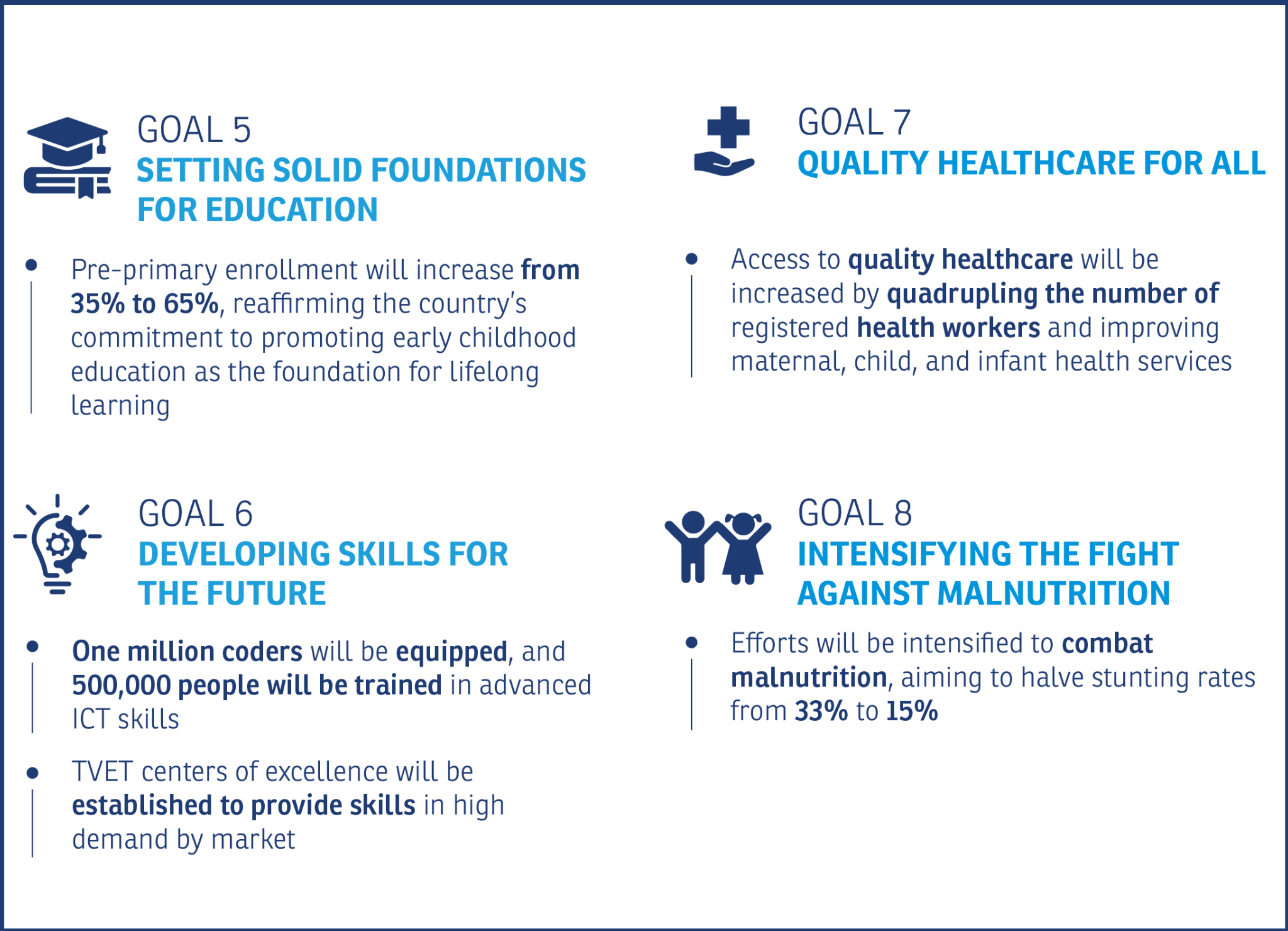
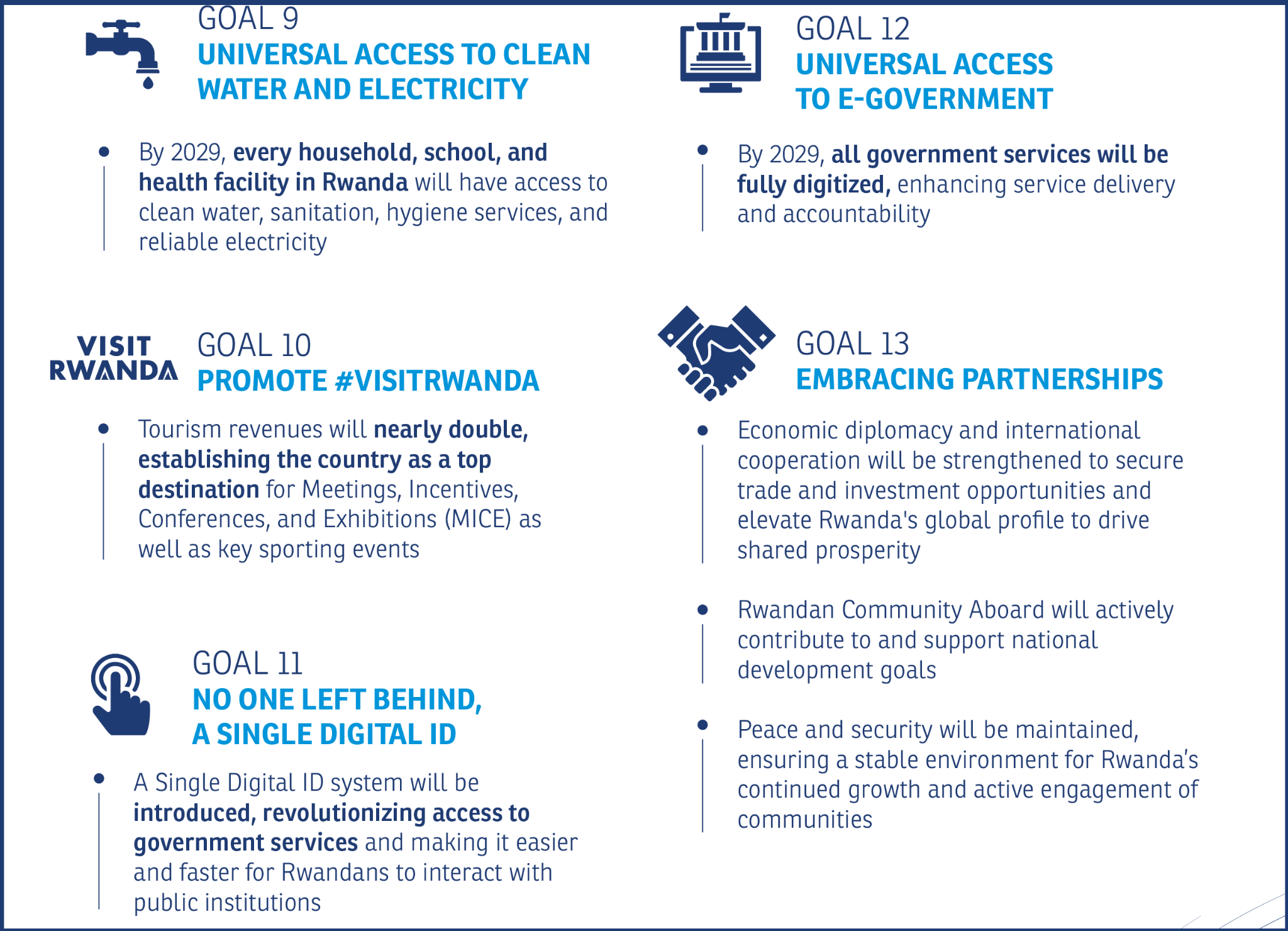
NST2 seeks to further advance the progress made under the previous strategy, NST1. It is designed to lay a strong foundation for sustained growth, bringing Rwanda closer to achieving higher living standards for all.
Looking Back at NST1 (2017-2024)
During the first National Strategy for Transformation (NST1), Rwanda made remarkable progress:
- Electricity: Household access to electricity increased from 34.4% in 2017 to 76.3% in 2024.
- ICT: Internet coverage now exceeds 97%, with 68.9% of the population online and 85% of young Rwandans tech-savvy.
- Public Services: Online government services surged from 155 in 2017 to 684 in 2024.
- Job Creation: Over 1.37 million jobs were created between 2017 and 2023.
- Mineral Exports: Value increased by 195%, supported by four new mineral processing factories.
- Tourism: Revenue grew by 66% from 2017 to 2023.
- Trade: Nine cross-border markets and two ports (one on Lake Kivu and one dry port in Kigali) were constructed.
- Industrial Growth: Three pharmaceutical and vaccine manufacturing plants were established.
- Housing: 87 modern villages were built, housing over 17,000 families from high-risk areas.
- RwandAir, the national carrier, expanded its destinations to 24 and added a large cargo aircraft.
- Economic Growth
Rwanda's nominal GDP grew by 112.3%, from 2017 to 2023, with an average annual growth rate of 7%.
- Education
Over 27,000 new classrooms were built, and technical schools increased from 200 in 2017 to 392 in 2024. Teacher numbers grew to over 110,000, and their welfare was improved with salary increases and better financial support through the Teacher's SACCO. School feeding programs expanded, improving student retention and performance.
- Healthcare
Seven new hospitals and 12 health centers were built, with health posts increasing from 473 to 1,252. The Community-Based Health Insurance program saw participation rise to 90.6%, and life expectancy improved from 66.6 years in 2017 to 69.6 years.
- International Trade
Exports grew at an average annual rate of 21%, with revenue more than doubling by 137% from 2017 to 2023, driven by the "Made in Rwanda" initiative.
Rwanda's development journey has been transformative, and the newly approved NST2 is poised to drive even greater achievements.